
Dealloying (selective leaching)

|
|
Dealloying (selective leaching) |
|
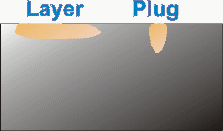
Dealloying or selective leaching refers to the selective removal of one element from an alloy by corrosion processes. A common example is the dezincification of unstabilized brass, whereby a weakened, porous copper structure is produced.
The selective removal of zinc can proceed in a uniform manner or on a localized (plug-type) scale. It is difficult to rationalize dezincification in terms of preferential Zn dissolution out of the brass lattice structure. Rather, it is believed that brass dissolves with Zn remaining in solution and Cu replating out of the solution. Graphitic corrosion of gray cast iron, whereby a brittle graphite skeleton remains following preferential iron dissolution is a further example of selective leaching. The term "graphitization" is commonly used to identify this form of corrosion but is not recommended because of its use in metallurgy for the decomposition of carbide to graphite.
During cast iron graphitic corrosion the porous graphite network, that makes up 4-5% of the total mass of the alloy, is impregnated with insoluble corrosion products. As a result, the cast iron retains its appearance and shape but is weaker structurally. Testing and identification of graphitic corrosion is accomplished by scraping through the surface with a knife to reveal the crumbling of the iron beneath. Where extensive graphitic corrosion occurs, usually the only solution is replacement of the damaged element.
| (previous) | Page 14 of 23 | (next) |